

THIS SITE IS INTENDED FOR U.S. HEALTHCARE PROFESSIONALS ONLY

ZOMACTON—a trusted growth
hormone treatment

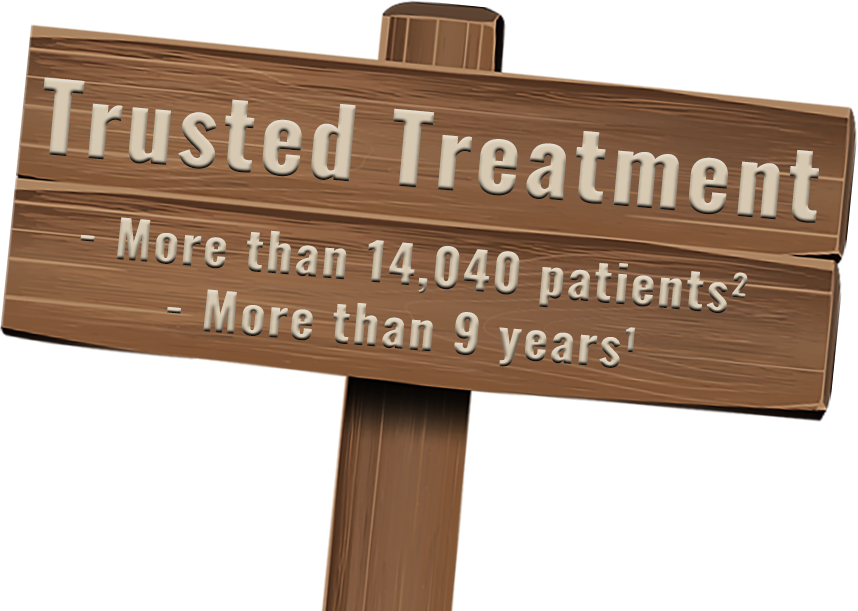
ZOMACTON is a growth hormone therapy that has been trusted for more than 9 years and prescribed for more than 14,040 patients.1,2

What it does

Your child’s body may not be producing enough growth hormone, specifically somatropin, to reach their full growth potential. ZOMACTON can be used as a growth hormone replacement. In fact, its structure is identical to somatropin, which is naturally produced in our bodies.1
ZOMACTON is reasonably priced to put patients first

We know the growth of your child is your biggest concern, but getting therapy that fits within your family’s budget matters too. ZOMACTON may be able to help with the cost of therapy, so you can focus more on your growing child and less on cost.

What to expect when starting ZOMACTON

When your child is prescribed ZOMACTON and begins therapy, you may see a sudden “growth spurt” within the first 6 months. Eventually, your child’s growth rate should slow and progress more steadily.1,3

While every child will respond to ZOMACTON differently, most who receive therapy reach a normal adult height that matches the average height of others in their family. Results may vary based on duration of treatment.3

Staying the course

Remember, your child’s growth journey is unique. Beginning treatment early can help support their development and give them the best opportunity to grow. No matter how your child responds to therapy,
it is important to follow the plan that has been discussed with your doctor.

Growth is a slow process, but every dose of ZOMACTON could make a difference with helping your child grow. Talk with your doctor about realistic short- and long-term expectations and how long treatment
will be necessary.

Links and downloadable tools for more education
and support
for you and your child.
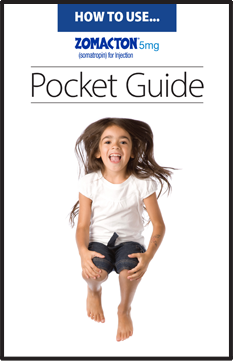
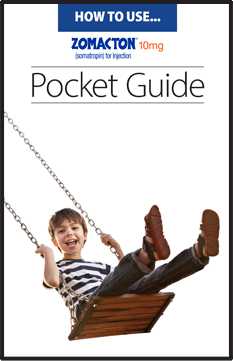
ZOMACTON 5mg
Pocket Guide
ZOMACTON 10mg
Pocket Guide

References: 1. ZOMACTON [Prescribing Information]. Parsippany, NJ: Ferring Pharmaceuticals Inc. 2. Data on file, Ferring Pharmaceuticals. 3. Rieser
PA. Pediatric growth hormone deficiency. In: Owens RP, Root AW. Growth Hormone Deficiency. The Human Growth Hormone Foundation Booklet. 1979.

ZOMACTON (somatropin) for Injection

Indications

ZOMACTON is a recombinant human growth hormone (GH) indicated for the treatment of pediatric patients with:

  • growth failure due to inadequate secretion of endogenous GH
  • short stature associated with Turner syndrome
  • idiopathic short stature (ISS)
  • short stature or growth failure in short stature homeobox-containing gene (SHOX) deficiency
  • short stature born small for gestational age (SGA) with no catch-up growth by 2 to 4 years

ZOMACTON is also indicated for the replacement of endogenous GH in adults with GH deficiency.

Contraindications

ZOMACTON is contraindicated in patients with:

  • acute critical illness
  • pediatric patients with Prader-Willi syndrome who are severely obese, have a history of upper airway obstruction or sleep apnea, or have severe respiratory impairment due to the risk of death
  • active malignancy
  • hypersensitivity to ZOMACTON, its excipients, or diluents. Systemic hypersensitivity reactions, including anaphylaxis and angioedema, have been reported with postmarketing use of somatropins
  • active proliferative or severe non-proliferative diabetic retinopathy
  • pediatric patients with closed epiphyses

Warnings and Precautions

Increased Risk of Neoplasm: Second neoplasms have occurred in childhood cancer survivors. Monitor patients with preexisting tumors for progression or recurrence.

Glucose Intolerance and Diabetes Mellitus: ZOMACTON may decrease insulin sensitivity, particularly at higher doses. Monitor glucose levels periodically, especially in patients with existing diabetes mellitus or at risk for development.

Intracranial Hypertension (IH): Has been reported usually within 8 weeks of initiation. Perform fundoscopic examinations prior to initiation and periodically thereafter. If papilledema occurs, stop treatment.

Hypersensitivity: Serious hypersensitivity reactions may occur, including anaphylaxis and angioedema; seek prompt medical attention.

Fluid Retention: May occur in adults and may be dose dependent.

Hypoadrenalism: Monitor patients for reduced serum cortisol levels or need for glucocorticoid dose increases in those with known hypoadrenalism.

Hypothyroidism: Monitor thyroid function periodically as hypothyroidism may occur or worsen after initiation of somatropin.

Slipped Capital Femoral Epiphysis in Pediatric Patients: May occur; evaluate patients with onset of a limp or hip/knee pain for slipped capital femoral epiphysis and osteonecrosis and manage accordingly.

Progression of Preexisting Scoliosis in Pediatric Patients: Monitor patients with scoliosis for progression.

Pancreatitis: Has been reported; consider pancreatitis in patients with abdominal pain, especially pediatric patients.

Risk of Serious Adverse Reactions in Infants due to Benzyl Alcohol Preservative: Serious and fatal adverse reactions can occur in neonates and infants treated with benzyl alcohol-preserved drugs, including the diluent for ZOMACTON 5 mg. If administering ZOMACTON 5 mg to infants, reconstitute with 0.9% sodium chloride injection.

Adverse Reactions

Common adverse reactions reported include: upper respiratory infection, fever, pharyngitis, headache, otitis media, edema, arthralgia, paresthesia, myalgia, carpal tunnel syndrome, peripheral edema, flu syndrome, hypothyroidism, hyperglycemia, and impaired glucose tolerance.

Drug Interactions

Glucocorticoids: Patients treated with glucocorticoids may require an increased dose.

Pharmacologic Glucocorticoid Therapy and Supraphysysiologic Glucocorticoid Treatment: Adjust dosing in pediatric patients to avoid hypoadrenalism or an inhibitory effect on growth.

Cytochrome P450-Metabolized Drugs: Monitor carefully if used with ZOMACTON as clearance may be altered.

Oral Estrogen: Larger doses of ZOMACTON may be required.

Insulin or Other Hypoglycemic Agents: Dose adjustment may be required.

Use In Specific Populations

Pregnancy and Lactation: If ZOMACTON 5 mg is needed, reconstitute with 0.9% sodium chloride injection or use the ZOMACTON 10 mg benzyl alcohol-free formulation.

Please see Full Prescribing Information for ZOMACTON.

ZOMACTON (somatropin) for Injection

Important Safety Information

Contraindications

ZOMACTON is contraindicated in patients with:

  • acute critical illness
  • pediatric patients with Prader-Willi syndrome who are severely obese, have a history of upper airway obstruction or sleep apnea, or have severe respiratory impairment due to the risk of death
  • active malignancy
  • hypersensitivity to ZOMACTON, its excipients, or diluents. Systemic hypersensitivity reactions, including anaphylaxis and angioedema, have been reported with postmarketing use of somatropins
  • active proliferative or severe non-proliferative diabetic retinopathy
  • pediatric patients with closed epiphyses

Warnings and Precautions

Increased Risk of Neoplasm: Second neoplasms have occurred in childhood cancer survivors. Monitor patients with preexisting tumors for progression or recurrence.

Glucose Intolerance and Diabetes Mellitus: ZOMACTON may decrease insulin sensitivity, particularly at higher doses. Monitor glucose levels periodically, especially in patients with existing diabetes mellitus or at risk for development.

Intracranial Hypertension (IH): Has been reported usually within 8 weeks of initiation. Perform fundoscopic examinations prior to initiation and periodically thereafter. If papilledema occurs, stop treatment.

Hypersensitivity: Serious hypersensitivity reactions may occur, including anaphylaxis and angioedema; seek prompt medical attention.

Fluid Retention: May occur in adults and may be dose dependent.

Hypoadrenalism: Monitor patients for reduced serum cortisol levels or need for glucocorticoid dose increases in those with known hypoadrenalism.

Hypothyroidism: Monitor thyroid function periodically as hypothyroidism may occur or worsen after initiation of somatropin.

Slipped Capital Femoral Epiphysis in Pediatric Patients: May occur; evaluate patients with onset of a limp or hip/knee pain for slipped capital femoral epiphysis and osteonecrosis and manage accordingly.

Progression of Preexisting Scoliosis in Pediatric Patients: Monitor patients with scoliosis for progression.

Pancreatitis: Has been reported; consider pancreatitis in patients with abdominal pain, especially pediatric patients.

Risk of Serious Adverse Reactions in Infants due to Benzyl Alcohol Preservative: Serious and fatal adverse reactions can occur in neonates and infants treated with benzyl alcohol-preserved drugs, including the diluent for ZOMACTON 5 mg. If administering ZOMACTON 5 mg to infants, reconstitute with 0.9% sodium chloride injection.

Adverse Reactions

Common adverse reactions reported include: upper respiratory infection, fever, pharyngitis, headache, otitis media, edema, arthralgia, paresthesia, myalgia, carpal tunnel syndrome, peripheral edema, flu syndrome, hypothyroidism, hyperglycemia, and impaired glucose tolerance.

Drug Interactions

Glucocorticoids: Patients treated with glucocorticoids may require an increased dose.

Pharmacologic Glucocorticoid Therapy and Supraphysysiologic Glucocorticoid Treatment: Adjust dosing in pediatric patients to avoid hypoadrenalism or an inhibitory effect on growth.

Cytochrome P450-Metabolized Drugs: Monitor carefully if used with ZOMACTON as clearance may be altered.

Oral Estrogen: Larger doses of ZOMACTON may be required.

Insulin or Other Hypoglycemic Agents: Dose adjustment may be required.

Use In Specific Populations

Pregnancy and Lactation: If ZOMACTON 5 mg is needed, reconstitute with 0.9% sodium chloride injection or use the ZOMACTON 10 mg benzyl alcohol-free formulation.

Please see Full Prescribing Information for ZOMACTON.

Indications

ZOMACTON is a recombinant human growth hormone (GH) indicated for the treatment of pediatric patients with:

  • growth failure due to inadequate secretion of endogenous GH
  • short stature associated with Turner syndrome
  • idiopathic short stature (ISS)
  • short stature or growth failure in short stature homeobox-containing gene (SHOX) deficiency
  • short stature born small for gestational age (SGA) with no catch-up growth by 2 to 4 years

ZOMACTON is also indicated for the replacement of endogenous GH in adults with GH deficiency.

ZOMACTON (somatropin) for Injection

Indications

ZOMACTON is a recombinant human growth hormone (GH) indicated for the treatment of pediatric patients with:

  • growth failure due to inadequate secretion of endogenous GH
  • short stature associated with Turner syndrome
  • idiopathic short stature (ISS)
  • short stature or growth failure in short stature homeobox-containing gene (SHOX) deficiency
  • short stature born small for gestational age (SGA) with no catch-up growth by 2 to 4 years

ZOMACTON is also indicated for the replacement of endogenous GH in adults with GH deficiency.

Contraindications

ZOMACTON is contraindicated in patients with:

  • acute critical illness
  • pediatric patients with Prader-Willi syndrome who are severely obese, have a history of upper airway obstruction or sleep apnea, or have severe respiratory impairment due to the risk of death
  • active malignancy
  • hypersensitivity to ZOMACTON, its excipients, or diluents. Systemic hypersensitivity reactions, including anaphylaxis and angioedema, have been reported with postmarketing use of somatropins
  • active proliferative or severe non-proliferative diabetic retinopathy
  • pediatric patients with closed epiphyses

Warnings and Precautions

Increased Risk of Neoplasm: Second neoplasms have occurred in childhood cancer survivors. Monitor patients with preexisting tumors for progression or recurrence.

Glucose Intolerance and Diabetes Mellitus: ZOMACTON may decrease insulin sensitivity, particularly at higher doses. Monitor glucose levels periodically, especially in patients with existing diabetes mellitus or at risk for development.

Intracranial Hypertension (IH): Has been reported usually within 8 weeks of initiation. Perform fundoscopic examinations prior to initiation and periodically thereafter. If papilledema occurs, stop treatment.

Hypersensitivity: Serious hypersensitivity reactions may occur, including anaphylaxis and angioedema; seek prompt medical attention.

Fluid Retention: May occur in adults and may be dose dependent.

Hypoadrenalism: Monitor patients for reduced serum cortisol levels or need for glucocorticoid dose increases in those with known hypoadrenalism.

Hypothyroidism: Monitor thyroid function periodically as hypothyroidism may occur or worsen after initiation of somatropin.

Slipped Capital Femoral Epiphysis in Pediatric Patients: May occur; evaluate patients with onset of a limp or hip/knee pain for slipped capital femoral epiphysis and osteonecrosis and manage accordingly.

Progression of Preexisting Scoliosis in Pediatric Patients: Monitor patients with scoliosis for progression.

Pancreatitis: Has been reported; consider pancreatitis in patients with abdominal pain, especially pediatric patients.

Risk of Serious Adverse Reactions in Infants due to Benzyl Alcohol Preservative: Serious and fatal adverse reactions can occur in neonates and infants treated with benzyl alcohol-preserved drugs, including the diluent for ZOMACTON 5 mg. If administering ZOMACTON 5 mg to infants, reconstitute with 0.9% sodium chloride injection.

Adverse Reactions

Common adverse reactions reported include: upper respiratory infection, fever, pharyngitis, headache, otitis media, edema, arthralgia, paresthesia, myalgia, carpal tunnel syndrome, peripheral edema, flu syndrome, hypothyroidism, hyperglycemia, and impaired glucose tolerance.

Drug Interactions

Glucocorticoids: Patients treated with glucocorticoids may require an increased dose.

Pharmacologic Glucocorticoid Therapy and Supraphysysiologic Glucocorticoid Treatment: Adjust dosing in pediatric patients to avoid hypoadrenalism or an inhibitory effect on growth.

Cytochrome P450-Metabolized Drugs: Monitor carefully if used with ZOMACTON as clearance may be altered.

Oral Estrogen: Larger doses of ZOMACTON may be required.

Insulin or Other Hypoglycemic Agents: Dose adjustment may be required.

Use In Specific Populations

Pregnancy and Lactation: If ZOMACTON 5 mg is needed, reconstitute with 0.9% sodium chloride injection or use the ZOMACTON 10 mg benzyl alcohol-free formulation.

Please see Full Prescribing Information for ZOMACTON.

ZOMACTON (somatropin) for Injection

Important Safety Information

Contraindications

ZOMACTON is contraindicated in patients with:

  • acute critical illness
  • pediatric patients with Prader-Willi syndrome who are severely obese, have a history of upper airway obstruction or sleep apnea, or have severe respiratory impairment due to the risk of death
  • active malignancy
  • hypersensitivity to ZOMACTON, its excipients, or diluents. Systemic hypersensitivity reactions, including anaphylaxis and angioedema, have been reported with postmarketing use of somatropins
  • active proliferative or severe non-proliferative diabetic retinopathy
  • pediatric patients with closed epiphyses

Warnings and Precautions

Increased Risk of Neoplasm: Second neoplasms have occurred in childhood cancer survivors. Monitor patients with preexisting tumors for progression or recurrence.

Glucose Intolerance and Diabetes Mellitus: ZOMACTON may decrease insulin sensitivity, particularly at higher doses. Monitor glucose levels periodically, especially in patients with existing diabetes mellitus or at risk for development.

Intracranial Hypertension (IH): Has been reported usually within 8 weeks of initiation. Perform fundoscopic examinations prior to initiation and periodically thereafter. If papilledema occurs, stop treatment.

Hypersensitivity: Serious hypersensitivity reactions may occur, including anaphylaxis and angioedema; seek prompt medical attention.

Fluid Retention: May occur in adults and may be dose dependent.

Hypoadrenalism: Monitor patients for reduced serum cortisol levels or need for glucocorticoid dose increases in those with known hypoadrenalism.

Hypothyroidism: Monitor thyroid function periodically as hypothyroidism may occur or worsen after initiation of somatropin.

Slipped Capital Femoral Epiphysis in Pediatric Patients: May occur; evaluate patients with onset of a limp or hip/knee pain for slipped capital femoral epiphysis and osteonecrosis and manage accordingly.

Progression of Preexisting Scoliosis in Pediatric Patients: Monitor patients with scoliosis for progression.

Pancreatitis: Has been reported; consider pancreatitis in patients with abdominal pain, especially pediatric patients.

Risk of Serious Adverse Reactions in Infants due to Benzyl Alcohol Preservative: Serious and fatal adverse reactions can occur in neonates and infants treated with benzyl alcohol-preserved drugs, including the diluent for ZOMACTON 5 mg. If administering ZOMACTON 5 mg to infants, reconstitute with 0.9% sodium chloride injection.

Adverse Reactions

Common adverse reactions reported include: upper respiratory infection, fever, pharyngitis, headache, otitis media, edema, arthralgia, paresthesia, myalgia, carpal tunnel syndrome, peripheral edema, flu syndrome, hypothyroidism, hyperglycemia, and impaired glucose tolerance.

Drug Interactions

Glucocorticoids: Patients treated with glucocorticoids may require an increased dose.

Pharmacologic Glucocorticoid Therapy and Supraphysysiologic Glucocorticoid Treatment: Adjust dosing in pediatric patients to avoid hypoadrenalism or an inhibitory effect on growth.

Cytochrome P450-Metabolized Drugs: Monitor carefully if used with ZOMACTON as clearance may be altered.

Oral Estrogen: Larger doses of ZOMACTON may be required.

Insulin or Other Hypoglycemic Agents: Dose adjustment may be required.

Use In Specific Populations

Pregnancy and Lactation: If ZOMACTON 5 mg is needed, reconstitute with 0.9% sodium chloride injection or use the ZOMACTON 10 mg benzyl alcohol-free formulation.

Please see Full Prescribing Information for ZOMACTON.

Indications

ZOMACTON is a recombinant human growth hormone (GH) indicated for the treatment of pediatric patients with:

  • growth failure due to inadequate secretion of endogenous GH
  • short stature associated with Turner syndrome
  • idiopathic short stature (ISS)
  • short stature or growth failure in short stature homeobox-containing gene (SHOX) deficiency
  • short stature born small for gestational age (SGA) with no catch-up growth by 2 to 4 years

ZOMACTON is also indicated for the replacement of endogenous GH in adults with GH deficiency.